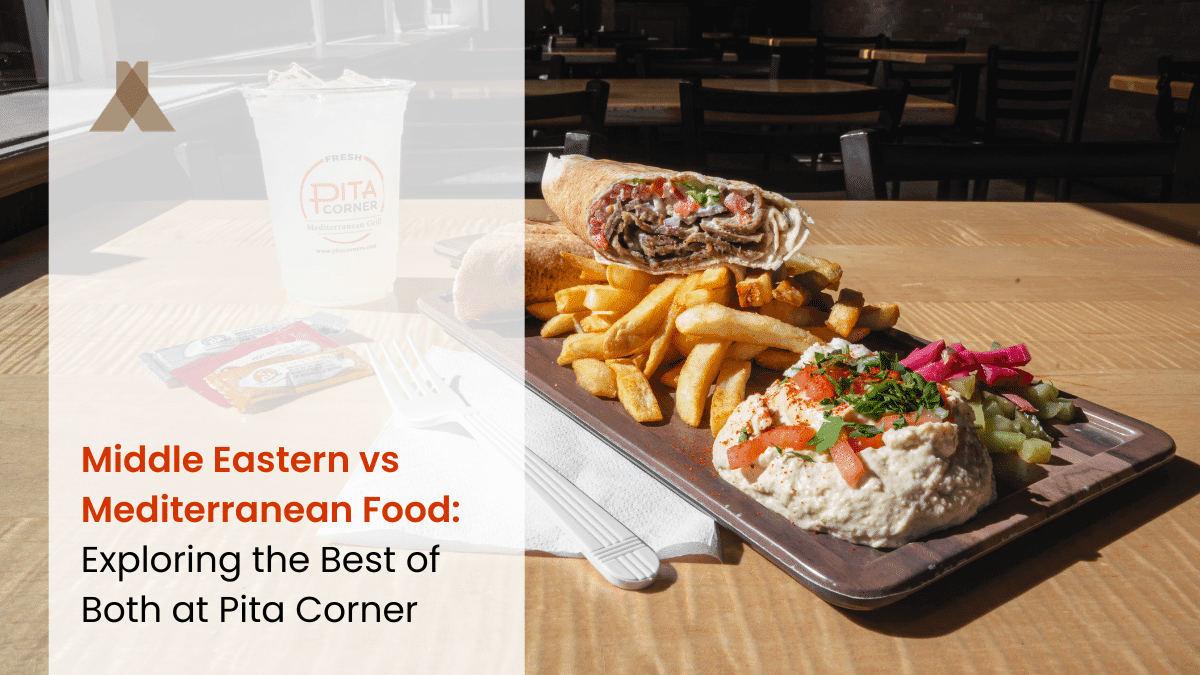
Middle Eastern vs Mediterranean Food: Exploring the Best of Both
The terms "Middle Eastern" and "Mediterranean" are frequently used interchangeably when discussing dishes like hummus, shawarma, falafel, or gyros. However, the two cuisines do overlap in some ways, they are not exactly the same.
The distinction is straightforward: Middle Eastern cuisine originates from Middle East nations, while Mediterranean cuisine reflects foods inspired by countries bordering the Mediterranean Sea, including Greece, Turkey, Lebanon, and nearby regions.
Both cuisines share common ingredients, olive oil, herbs, grilled meats, and fresh vegetables, making many dishes feel connected. Pita Corner's menu combines these Mediterranean and Middle Eastern influences through customizable pitas, bowls, platters, and salads.
What Defines Mediterranean Food?
Mediterranean cuisine emphasizes balance and freshness, featuring grilled proteins, vegetables, herbs, olive oil, rice, and pita bread. Flavors remain bright and clean rather than heavy, utilizing ingredients like lemon, garlic, parsley, oregano, and olive oil.
Typical Mediterranean-style elements include:
- Grilled meats and seafood
- Fresh salads
- Rice and pita bread
- Olive oil-based flavors
- Herbs and lighter seasoning blends
Pita Corner dishes like Chicken Kabob, Salmon, and Greek Salad exemplify this approach. The Pro Bowl and Pro Salad offer customization options for varying preference levels.
What Defines Middle Eastern Food?
Middle Eastern cuisine emphasizes warming spices, slow-seasoned meats, dips, and layered flavor combinations. The food features rich aromatics and depth without necessarily being heat-spicy.
Common Middle Eastern-style elements include:
- Shawarma and seasoned meats
- Hummus and baba
- Falafel
- Tahini-based sauces
- Stronger spice profiles
Pita Corner's Steak Shawarma and Chicken Shawarma showcase these Middle Eastern influences particularly well.
Pita Corner: Where the Two Cuisines Overlap
The confusion between these cuisines stems from shared ingredients and traditions. Both commonly feature:
- Fresh vegetables
- Grilled proteins
- Rice and pita
- Chickpeas and legumes
- Olive oil and herbs
At Pita Corner, these influences naturally converge, combining Middle Eastern shawarma spices with Mediterranean-style salads and sides.
The overlap appears in dishes like:
- Chicken shawarma pita with Greek salad
- Falafel with hummus and fattoush
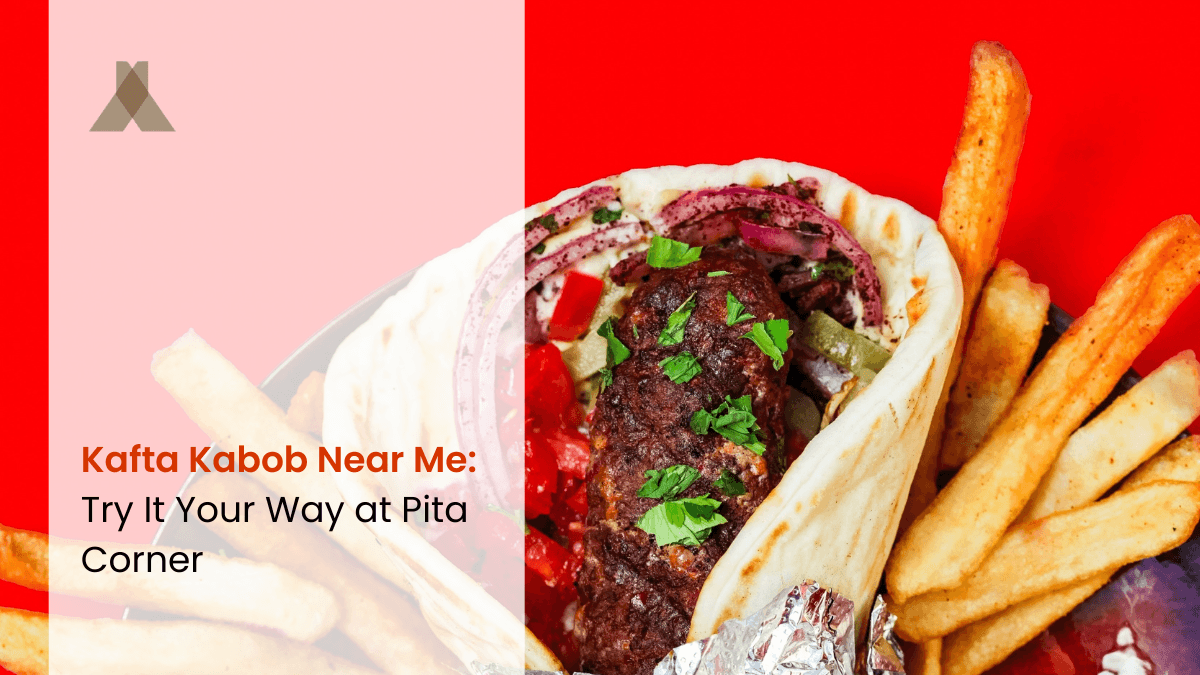
- Kafta kabob plates with rice and pita
- Pita boards served with hummus and pickles
Exploring the Menu With Both Styles
Pita Corner allows diners to mix flavors depending on preferences.
For Mediterranean-style meals, try:
- Chicken Kabob
- Salmon
- Greek Salad
- Pro Bowl with rice and grilled protein
For stronger Middle Eastern flavors, choose:
- Steak shawarma
- Chicken shawarma
- Falafel
- Hummus and baba
- Lentil soup
Diners can combine elements from both styles within a single meal.
Two Traditions Connected by Fresh Flavors
Understanding these cuisines becomes easier when examining flavors, ingredients, and cooking styles. Mediterranean food emphasizes freshness, balance, and grilled simplicity, while Middle Eastern cuisine highlights spices, layered flavors, and comforting richness.
Pita Corner's menu brings these influences together in an approachable and customizable manner, enabling diners to experience flavors inspired by both traditions on every visit.